

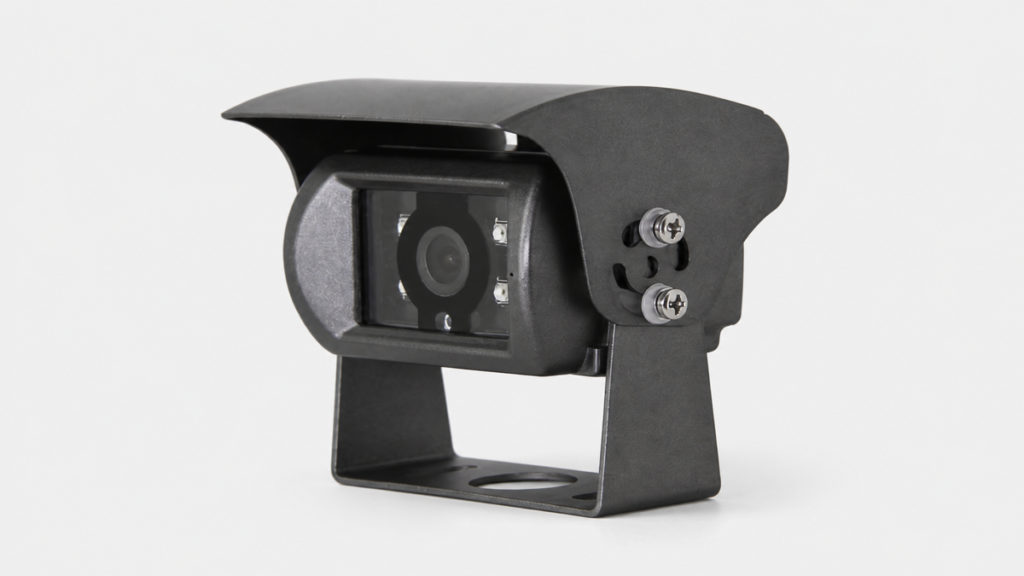
Vehicle camera buyers often see a focal-length value such as 2.6 mm or 2.8 mm and treat it as a shortcut for the expected field of view. That shortcut is unreliable. Focal length influences how wide or narrow an image appears, but the installed result also depends on the image sensor, lens design, camera housing, listed angle definition, mounting height, camera tilt, and the area the operator needs to see.
Xinvisual quotation records list a 2.8 mm focal length alongside different horizontal angles, including 95, 140 and 165 degrees. Another quotation lists 2.6 mm and 130 degrees without identifying the angle axis. These are supplier-listed examples, not a controlled optical test or a universal conversion table. They do not establish why the numbers differ. Confirm the exact lens and camera configuration, angle definition and sample image before using any pair as an ordering requirement.
This guide explains how to use focal length as one part of a complete commercial vehicle camera decision.
What Vehicle Camera Focal Length Tells You
Focal length is an optical specification expressed in millimeters. When the sensor and lens design remain comparable, a shorter focal length generally produces a wider view, while a longer focal length generally produces a narrower view with objects appearing larger in the frame. The practical phrase is "when the sensor and lens design remain comparable." Vehicle cameras do not all use the same sensor, housing, optical stack, or angle definition.
For background on the optical relationship, Edmund Optics explains how focal length and sensor size affect field of view. That reference supports the general principle, not the accuracy of a particular Xinvisual specification. A 2.8 mm vehicle camera lens should not automatically be described as one fixed viewing angle. The product record should keep these fields together:
- focal length;
- listed horizontal, vertical, or diagonal viewing angle;
- image sensor or camera specification;
- resolution and video format;
- intended camera position;
- mounting height and tilt;
- mirror or normal image behavior;
- monitor or recorder compatibility.
Buyers who need a broader introduction to camera placement can also review the commercial vehicle camera category before comparing individual products.
Why the Same Focal Length Can Produce Different Listed Angles
Sensor Format Changes the Captured View
Focal length describes the lens, but the sensor determines how much of the lens image is captured. A lens used with one sensor format may produce a different field of view than the same nominal focal length used with another. If a quotation lists focal length but not the relevant sensor or exact camera configuration, do not calculate the expected installed angle from focal length alone.
Lens Design and Distortion Matter
Two lenses with the same nominal focal length may use different optical designs. A very wide lens may show more area near the vehicle but may also make objects near the edge appear stretched or smaller. That does not make a wide lens unsuitable; it means the buyer must judge whether the image supports the operating task.
Angle Definitions Are Not Interchangeable
A specification may state horizontal, vertical, or diagonal viewing angle. These values answer different questions. A diagonal angle will normally be larger than the horizontal angle from the same image, so a buyer comparing an unlabeled 150-degree value with a clearly labeled 140-degree horizontal value may be comparing different measurements.
Require the supplier to label the angle type. If the available document does not identify it, mark the field as unconfirmed and approve the sample image on the target vehicle.
Read the Lens and Angle Fields Together
The examples below show how to record the available fields without filling gaps by assumption. Ask for the current configuration sheet before ordering. The quotation records do not supply a controlled field-of-view test or the sensor dimensions needed to explain the differences.
| Listed Camera Role | Listed Focal Length | Listed Angle | Angle Definition | What Still Needs Checking |
|---|---|---|---|---|
| Rear or reversing | 2.8 mm | 95 degrees | Horizontal, as stated in quotation | Exact lens/configuration and coverage of the required rear zone. |
| Front and rear monitoring | 2.8 mm | 140 degrees | Horizontal, as stated in quotation | Current configuration sheet and sample image at the planned position. |
| Left and right monitoring | 2.8 mm | 140 degrees | Horizontal, as stated in quotation | Near-side coverage, image direction and usable target detail. |
| Special work-area monitoring | 2.8 mm | 165 degrees | Horizontal, as stated in quotation | Measurement conditions, edge distortion and visibility of the working target. |
| Additional fixed-camera group | 2.6 mm | 130 degrees | Not specified in quotation | Whether the angle is horizontal, vertical or diagonal; do not compare it as horizontal. |
Availability and the exact combination must be reconfirmed before ordering. The table does not establish compatibility with every monitor or recorder and does not promise the same field of view after installation on different vehicles.
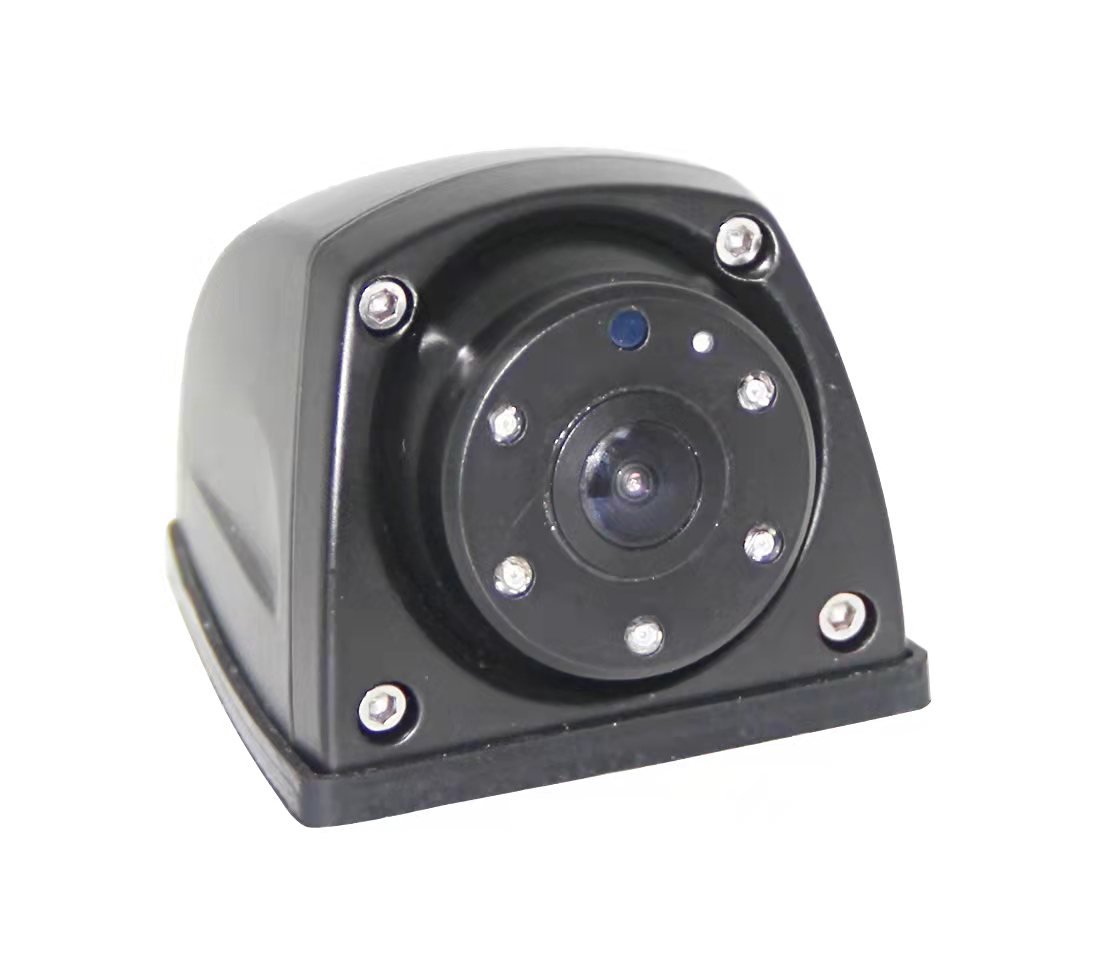
Camera housing shown for product identification and mounting discussion, not as evidence of a particular viewing angle.
Apply the Question to the Vehicle
Rear Reversing View
For a truck, bus, trailer or RV reversing view, identify the ground zone and vehicle edges that must fit in the image. Supply mounting height, rear overhang and body obstructions when discussing an AHD waterproof backup camera. A focal-length value alone does not confirm that those targets will be visible.
Side Blind-Spot View
For a side-view camera, specify whether the target is a wheel area, adjacent lane, passenger door or the side of a long body. Confirm the installed view and image direction. A wide lens does not automatically place the important area in the center of the image.
Work-Area and Equipment View
Construction or loading equipment may need visibility of a platform, cargo bed or attachment. These are typical application examples, not claimed customer installations. Define the nearest and farthest target positions, possible obstructions and cable movement; do not choose from a generic "wide angle" label.
Technical Selection Process
1. Define the Visibility Task in Measurable Terms
Write down what the operator must see, where that target is located, and the useful distance range. "Rear camera" is not specific enough. A better requirement identifies the near ground zone, vehicle edges, loading point, side lane, or equipment attachment that must remain visible.
2. Compare Focal Length with the Listed Angle
Request focal length and a labeled horizontal, vertical, or diagonal angle for the exact camera. If only one field is supplied, request the missing information or treat it as unconfirmed. Do not replace a supplier's model-specific angle with an online focal-length calculator.
3. Match the Camera to the Display or Recorder
Focal length does not determine signal compatibility. Confirm AHD or CVBS format, supported resolution, PAL/NTSC behavior, connector pin assignment, camera voltage, and whether the monitor or recorder supplies camera power. The vehicle camera connector guide explains why matching plug shape alone is insufficient.
4. Review Mounting Geometry
Measure camera height, distance to the target, bracket adjustment range, body overhang, and likely obstructions. Confirm that the housing can be aimed without exposing the cable exit or connector to avoidable strain. For exterior positions, review ingress protection and connector sealing separately; the IP69K vehicle camera guide covers that part of the selection process.
5. Approve the Real Image Before Bulk Ordering
Have a qualified installer plan and perform installation and sample checks under the vehicle manufacturer's and worksite's safety procedures. Do not adjust cameras while a vehicle or machine is operating. Image approval does not replace the site's other required safety controls.
Install the sample on a representative vehicle. Capture daytime and low-light images from the operating position. Mark the important near and far targets, note the camera height and angle, and save screenshots from the actual monitor or recorder. Repeat the test with any split-screen layout the driver will use.
The approved record should include the camera configuration, focal length, listed angle, image mode, signal format, connector, power plan, cable length, mounting position, and screenshots. That record is more useful for repeat orders than a focal-length value copied into a purchase order.
Common Buyer Mistakes
Mistake 1: Assuming Every 2.8 mm Lens Has the Same View
A focal-length label is incomplete without the camera configuration and angle definition. Keep them together and verify the sample; do not treat quotation differences as a measured optical comparison.
Mistake 2: Selecting the Widest Angle by Default
A wider image can cover more area, but the target may appear smaller or move toward a distorted edge. Select for the task, not for the largest number.
Mistake 3: Comparing Unlabeled Angle Values
Horizontal, vertical, and diagonal angles are not interchangeable. Ask which measurement is stated.
Mistake 4: Ignoring the Monitor Layout
A useful full-screen camera image may become too small in a four-way or eight-way split. Approve the actual display mode.
Mistake 5: Treating the Sample as Approved Without a Record
If the buyer does not save the lens, angle, camera, bracket position, and screenshots, a repeat order can drift away from the original view.
Buyer Checklist
- Define the exact target area and operating distance.
- Record the focal length for the exact camera configuration.
- Confirm whether the listed angle is horizontal, vertical, or diagonal.
- Confirm sensor, resolution, signal format, and PAL/NTSC behavior.
- Confirm mirror or normal image direction.
- Check monitor or recorder input compatibility.
- Verify connector type and pin assignment.
- Confirm camera voltage and the complete power plan.
- Measure mounting height, tilt, obstructions, and cable route.
- Confirm exterior waterproofing and connector sealing where required.
- Test daytime, low-light, full-screen, and split-screen views.
- Save approved screenshots and the complete sample configuration.
FAQ
Is a 2.8 mm vehicle camera always wide angle?
No single angle should be assumed from the 2.8 mm value alone. Available Xinvisual specifications pair 2.8 mm with different listed horizontal angles. Confirm the exact camera, sensor, listed angle, and sample image.
Should I choose the shortest focal length available?
Not automatically. A shorter focal length may provide a wider view in a comparable optical system, but the important target can appear smaller. Choose the focal length and angle that support the actual operating task.
Can focal length confirm compatibility with my monitor or MDVR?
No. Compatibility depends on video format, resolution, PAL/NTSC behavior, connector pinout, power, and supported inputs. Focal length only addresses one part of the camera's optical configuration.
What should be included in a vehicle camera sample approval?
Record the exact camera configuration, focal length, listed angle type, mounting position, image direction, video format, connector, power plan, cable route, display mode, and representative screenshots.
Need Help Confirming the Camera Configuration?
Send Xinvisual the vehicle type, target area, camera positions, mounting height, useful distance, monitor or MDVR video inputs, power voltage, cable length, connector preference and recording requirements. Include the focal length or angle shown on your existing specification, plus installation photos with any private details removed.
We can review the available configuration information and identify which lens, interface and installation details still need confirmation before sample approval.
Request a Configuration Review