

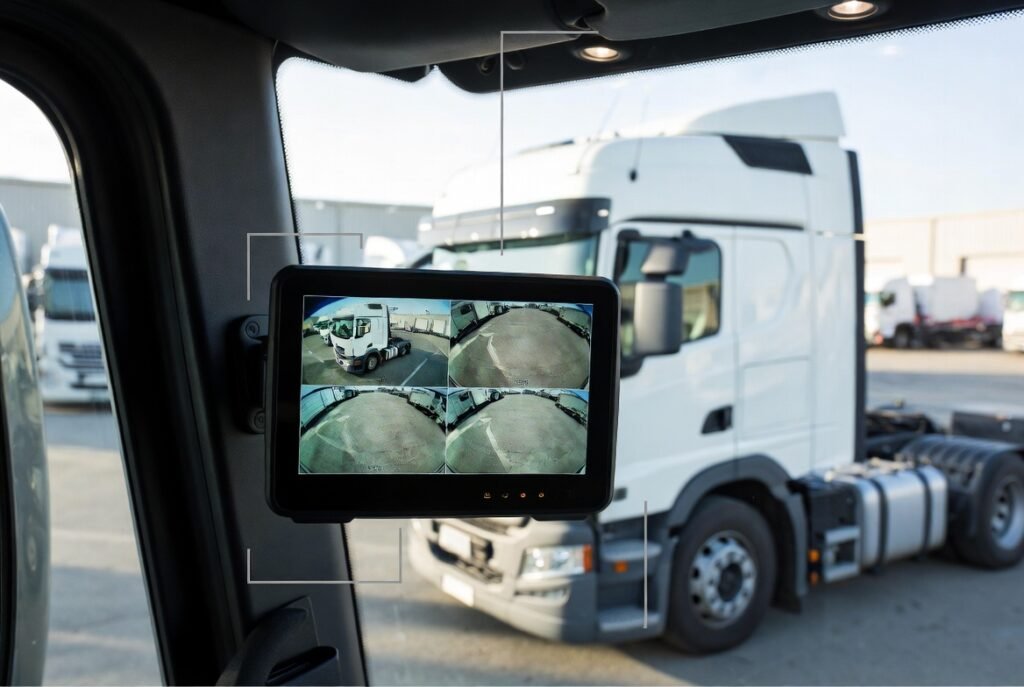
For modern commercial vehicles, relying on a single camera is no longer enough.
A standalone reversing camera is excellent for parking, but it does nothing to mitigate the severe blind spot risks at the front and sides of the vehicle. This is especially true for trucks, vans, buses, forklifts, and heavy machinery. In real-world environments, drivers constantly navigate narrow roads, crowded loading docks, pedestrians, cyclists, and low-lying obstacles.
This reality has fleet operators and vehicle builders asking a critical question: How should rear, side, and front-view cameras be combined to maximize safety and operational efficiency?
The right answer depends entirely on the vehicle type, the operating environment, and the driver’s daily visibility challenges. In this article, we break down the exact role of each camera and how to combine them into a practical, unified safety system.
1. The Role of Each Camera
Before building a multi-camera system, it is vital to understand the specific job of each component.
-
Rear-View Camera: This is your first line of defense for reversing, parking, docking, or maneuvering in tight spaces. Without it, drivers cannot see pedestrians, low walls, or pallets hidden directly behind trucks, delivery vans, and heavy equipment.
-
Side-View Camera: Designed specifically to eliminate blind spots on the left or right side of the vehicle. Usually mounted near the side mirrors or on the vehicle body, this camera is critical for turning at intersections, changing lanes, and passing vulnerable road users (cyclists and pedestrians) safely.
-
Front-View Camera: Large vehicles naturally suffer from a forward blind zone caused by high cabs or long front hoods. A front-facing camera reveals low obstacles, workers, or machinery directly in front of the bumper, which is essential for pulling out of tight spaces or maneuvering in crowded yards.
2. Why One Camera Is Rarely Enough
Many fleet buyers start with a single rear camera because reversing feels like the most obvious risk. However, accident data and daily operational realities tell a different story. Risks come from all directions:
-
A cyclist entering the side blind spot during a right-hand turn.
-
A worker standing just out of sight behind a reversing truck.
-
A low concrete barrier hidden beneath the front bumper’s line of sight.
If your only goal is to reverse safely, a single camera works. But if the goal is to protect lives, reduce liability, and support professional drivers, a multi-camera combination is the only practical solution.
3. The Most Common Camera Combinations
Different vehicles require different setups. We have outlined the most practical combinations used in the commercial sector today:
| Camera Combination | Best Suited For | Key Advantages | Primary Limitations |
| Rear View Only | Small vans, light-duty trucks, tight budgets. | Low cost; easy installation; solves basic reversing risks. | Zero side or front blind spot coverage. |
| Rear + One Side | Box trucks, delivery vans, small buses. | Balances cost and function; covers the most dangerous side blind spot. | Front area remains hidden; opposite side is unprotected. |
| Rear + Dual Side | Heavy trucks, transit buses, urban utility vehicles. | Excellent lane-change support; total side-impact awareness. | Front blind zone remains; requires a multi-channel monitor. |
| Front + Rear + Dual Side | Construction machinery, heavy-duty fleets, forklifts, specialized vehicles. | Complete 360-degree awareness; maximum protection for workers/pedestrians. | Higher system cost; requires professional installation and quad-view monitor. |
4. How to Choose the Right Combination
There is no “one-size-fits-all” camera setup. To find the right system, evaluate these three factors:
-
Vehicle Size: The larger the vehicle, the wider the blind spots. A small transit van might be perfectly safe with a rear and passenger-side camera, whereas an articulated truck requires comprehensive, multi-directional coverage.
-
Operating Environment: A truck driving exclusively on open highways has different needs than a garbage truck navigating dense city centers, or a forklift operating in a busy warehouse. Crowded environments demand multi-camera coverage.
-
Monitor and Trigger Integration: The system design matters just as much as the cameras themselves. A smart setup will automatically display the rear camera when the vehicle is in reverse, trigger the side cameras using the turn signals, and utilize a quad-view monitor for seamless monitoring.
5. Recommended Setups by Vehicle Type
If you are unsure where to start, here are our baseline recommendations for common commercial vehicles:
-
Delivery Vans: A rear camera + one side camera (passenger side). Perfect for city parking and urban lane changes.
-
Heavy Trucks: A rear camera, front camera, and dual side cameras.
-
Buses: Rear and side cameras are non-negotiable. A front camera is highly recommended for crowded bus stops.
-
Forklifts & Machinery: Rear and front cameras are crucial, as heavy loads frequently block the driver’s forward vision.
6. The Golden Rule: Cover Your Real Blind Spots First
When planning a vehicle safety system, do not simply add cameras for the sake of having a complex system. Start by asking: Where are the actual blind spots for this specific vehicle during its daily routine?
For some vehicles, the rear is the danger zone. For others, a high cab makes the front bumper a massive liability. The best system isn’t the one with the most cameras—it is the one that directly solves the driver’s most critical visibility problems.
Final Thoughts
Rear, side, and front-view cameras are not just accessories; they are specialized tools designed to solve specific visibility failures.
If you want a simple upgrade, start with a rear camera. But if you want a professional, comprehensive safety setup, integrating rear, side, and front cameras is the industry standard. For modern commercial fleets, a well-designed multi-camera system is the key to safer roads, confident drivers, and a protected bottom line.
FAQ Section
Q: Can I view all four cameras on one screen? A: Yes. Professional fleet systems use “multi-channel” or “quad-view” monitors. These allow you to see all angles at once in a split-screen format or switch to a full-screen view of a specific camera when needed.
Q: Which side camera is the most important for a truck? A: If you are only installing one side camera, it should be placed on the passenger side. Because this side is furthest from the driver, it contains the largest and most dangerous blind spot, especially during turns at intersections.
Q: Do these cameras turn on automatically? A: Most professional setups use “triggers.” For example, the rear camera automatically displays when you put the vehicle in reverse, and the side cameras can be wired to display when you use your left or right turn signals.
Q: Is a front camera really necessary for trucks? A: For vehicles with high cabs (like HGVs) or long hoods, there is a significant “blind zone” directly in front of the bumper. A front camera is highly recommended to prevent accidents involving pedestrians or low-lying obstacles in crowded yards.
Q: Can these systems be retrofitted to older vehicles? A: Absolutely. Most high-quality camera and monitor systems are designed to be “universal,” meaning they can be installed on existing fleets regardless of the vehicle’s age or brand.
Ready to upgrade your fleet’s safety?
At Xinvisual Electronics, we provide professional-grade camera and monitor solutions for every type of commercial vehicle. [Contact our team today] to discuss the best camera combination for your specific project.