

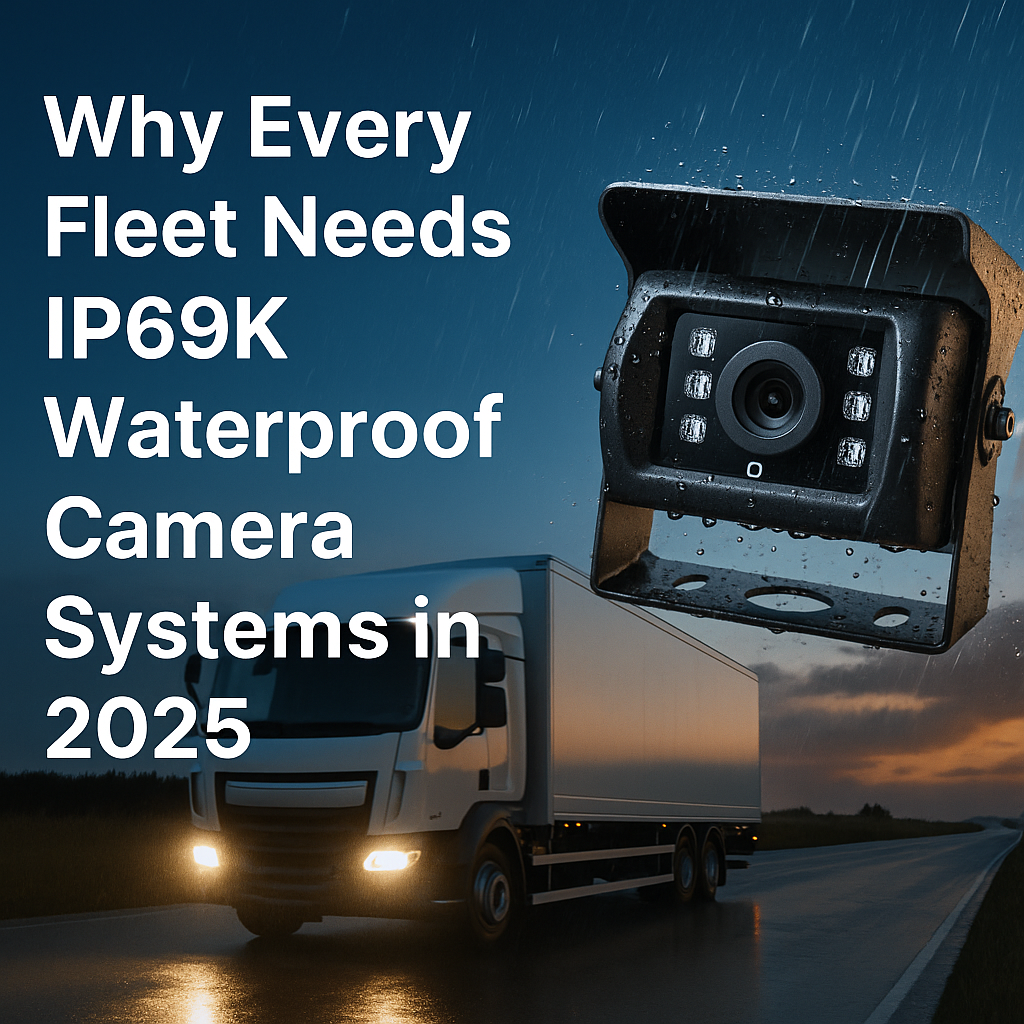
IP69K waterproof vehicle camera systems are designed for commercial vehicles that operate in rain, dust, mud, vibration and high-pressure wash environments. For trucks, trailers, forklifts, construction machinery, agricultural vehicles and fleet projects, choosing the right camera housing, connector, monitor and recording setup can improve visibility and reduce maintenance problems.
This guide explains what IP69K means, when it matters, how it compares with IP67 and IP68, and how fleet buyers can choose a suitable waterproof camera system for real working conditions.
Quick Answer
An IP69K waterproof vehicle camera system is suitable for fleets that need cameras to withstand dust, rain, mud and high-pressure cleaning. It is commonly used on trucks, forklifts, construction machinery, agricultural equipment and industrial vehicles. For most fleet projects, buyers should check waterproof rating, connector type, viewing angle, night vision, monitor compatibility and whether MDVR recording or AI detection is required.
What Does IP69K Mean for Vehicle Cameras?
IP ratings describe how well an enclosure protects internal parts against dust and water. For vehicle cameras, this matters because the camera is often installed outside the vehicle, close to water spray, road dust, mud, vibration and cleaning equipment.
IP69K is commonly used for equipment that needs protection against dust and high-pressure, high-temperature water spray. In vehicle camera applications, this rating is especially useful for fleets that wash vehicles regularly or operate in outdoor industrial environments.
For buyers, IP69K should be considered together with the full system design. A waterproof camera is only one part of the system. Cable connectors, extension cables, brackets, monitor compatibility and installation position also affect long-term reliability.
IP67 vs IP68 vs IP69K: Which Rating Should You Choose?
Not every commercial vehicle requires IP69K, but it becomes important when cameras are exposed to aggressive cleaning, mud, dust or outdoor working conditions.
| Rating | Typical Meaning | Best For |
|---|---|---|
| IP67 | Dust-tight and protected against temporary water immersion | General outdoor vehicle use |
| IP68 | Dust-tight and protected against longer water immersion under specified conditions | Wet environments and exposed vehicle installations |
| IP69K | Dust-tight and protected against high-pressure, high-temperature water spray | Fleet vehicles, washdown areas, industrial vehicles and heavy-duty applications |
If your vehicles are mainly used indoors or in light-duty conditions, IP67 or IP68 may be enough. If the camera is installed on trucks, forklifts, construction machinery or agricultural equipment that is regularly exposed to washdown or heavy dirt, IP69K is usually the better choice.
Why Standard Vehicle Cameras May Fail in Harsh Environments
Outdoor fleet cameras can face several common problems when the protection level is not suitable for the application:
- Moisture entering the camera housing after washing or heavy rain
- Lens fogging caused by temperature changes
- Dust and mud reducing rear view or side view visibility
- Connector corrosion caused by water or road chemicals
- Loose brackets or unstable images caused by vibration
When a camera fails, the driver may lose rear, side or blind spot visibility. For fleet operators, this can lead to downtime, extra maintenance and higher replacement cost. A better-rated camera system helps reduce these risks when it is selected and installed correctly.
Recommended Applications for IP69K Waterproof Cameras
Trucks and Trailers
Trucks and trailers often need rear view, side view and loading area monitoring. An IP69K camera can support reversing, docking and lane-side visibility in outdoor logistics environments. For fleet recording, the camera can also be connected with an MDVR system.
Forklifts and Warehouse Vehicles
Forklifts may need rear blind spot monitoring, fork view support or pedestrian awareness in narrow aisles. For wireless retrofit projects, buyers can consider a wireless forklift camera system or a complete forklift safety camera solution.
Construction Machinery
Excavators, loaders, dump trucks and other construction vehicles operate in dust, mud, rain and vibration. IP69K vehicle cameras are suitable for heavy-duty monitoring positions where regular cleaning and outdoor exposure are expected.
Agricultural Equipment
Tractors, harvesters and field equipment may need cameras for reversing, attachment monitoring and side visibility. Dust, irrigation water and outdoor cleaning make waterproof camera selection important for agricultural applications.
How to Choose an IP69K Vehicle Camera System
Before choosing a waterproof vehicle camera, buyers should look beyond a single specification. A practical system selection should include the camera, display, cable connection and optional recording equipment.
- Waterproof rating: Confirm whether IP67, IP68 or IP69K is required for the real working environment.
- Camera housing: Choose a housing suitable for vibration, outdoor installation and vehicle cleaning routines.
- Connector type: Check whether the project needs aviation connector, waterproof connector or OEM connector customization.
- Viewing angle: Use a wider angle for blind spot coverage and a narrower angle when distance judgment is important.
- Night vision: Confirm whether infrared night vision is required for reversing, loading or night operation.
- Monitor size: Match the monitor to the vehicle cabin and driver workflow.
- Wired or wireless installation: Wireless systems can reduce cabling work for retrofit projects; wired systems may be preferred for permanent fleet installations.
- Recording requirement: Use MDVR when the fleet needs video evidence, driver review or multi-camera recording.
- AI detection requirement: For blind spot or pedestrian detection applications, consider an AI blind spot detection camera solution.
- OEM support: Confirm cable length, bracket, connector, housing color and packaging requirements before mass production.
Recommended Xinvisual Product Combinations
Basic Waterproof Camera Setup
Recommended for trucks, vans, RVs and light commercial vehicles that need reliable rear view or side view monitoring.
Typical configuration: IP69K vehicle camera + vehicle monitor.
Fleet Recording Setup
Recommended for commercial fleets that need multi-camera recording, playback and event review.
Typical configuration: IP69K cameras + MDVR fleet recording system + display monitor.
Forklift and Industrial Setup
Recommended for warehouses, loading areas and industrial vehicles where cable routing can be difficult.
Typical configuration: IP69K camera + wireless monitor or AI pedestrian detection monitor.
AI Safety Upgrade
Recommended for blind spot detection applications on trucks, buses, forklifts and industrial vehicles.
Typical configuration: AI BSD camera + monitor or MDVR integration. This can be used as a safety system component for blind spot detection applications without making certified compliance claims.
Where Xinvisual Can Support Your Project
Xinvisual Electronics supplies vehicle cameras, monitors, wireless camera systems, AI blind spot detection cameras, MDVR systems and vehicle display products for distributors, fleet projects and OEM applications.
For IP69K waterproof camera projects, our team can help review vehicle type, installation position, monitor requirements, connector type and operating environment before recommending a suitable product combination.
Request an IP69K Camera System Recommendation
FAQ
What does IP69K mean for a vehicle camera?
For a vehicle camera, IP69K means the camera housing is designed to resist dust and high-pressure, high-temperature water spray under specified test conditions. It is useful for vehicles exposed to washdown, mud, rain and industrial environments.
Is IP69K better than IP67 or IP68 for fleet vehicles?
IP69K is more suitable when the camera may face high-pressure cleaning or harsh outdoor use. IP67 or IP68 may still be enough for lighter applications, depending on installation position and working environment.
Which vehicles need IP69K waterproof cameras?
Common applications include trucks, trailers, forklifts, construction machinery, agricultural equipment, industrial vehicles and fleet vehicles that operate outdoors or require regular cleaning.
Can an IP69K camera work with a wireless monitor?
Yes. An IP69K camera can be used as part of a wireless monitoring system when the camera, transmitter, monitor and power connection are selected for the same application requirements.
Can IP69K cameras be connected to MDVR systems?
Yes. IP69K vehicle cameras can be connected with MDVR systems for fleet recording when the video format, connector and power requirements are compatible.
Can Xinvisual customize connectors, brackets or cable lengths?
Xinvisual can support OEM and ODM requirements such as connector selection, cable length, mounting bracket, housing color and product configuration based on project requirements.