

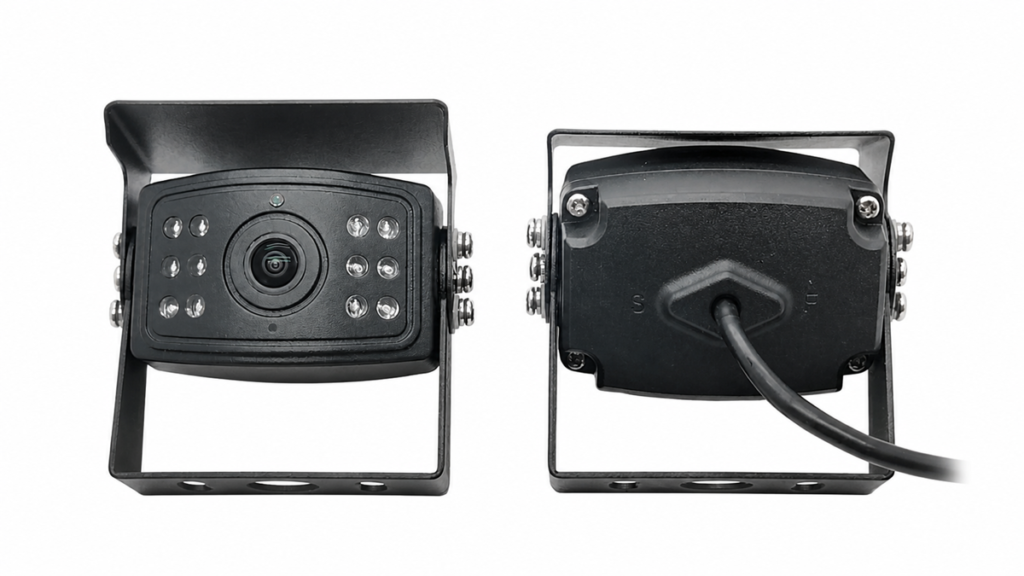
Vehicle camera vibration resistance should be checked as a model-specific procurement requirement, not accepted as a general statement that a camera is “heavy duty.” A value such as 8G or 10G can help buyers shortlist products, but the value alone does not identify the test method, vibration profile, mounting condition, axis, duration, or pass criteria.
That distinction matters for distributors, fleets, OEM engineers, and installers. A camera may be mounted on a truck body, trailer door, forklift mast, construction machine, agricultural vehicle, or inside a cab. Each position has a different vibration pattern and a different risk of bracket movement, cable strain, connector loosening, or image interruption.
Available Xinvisual product specifications list shockproof values for selected vehicle cameras. They do not provide a complete vibration-test protocol or laboratory report in the reviewed file. Buyers should therefore use the listed value as one input to sample approval, then request the missing project evidence before a production order.
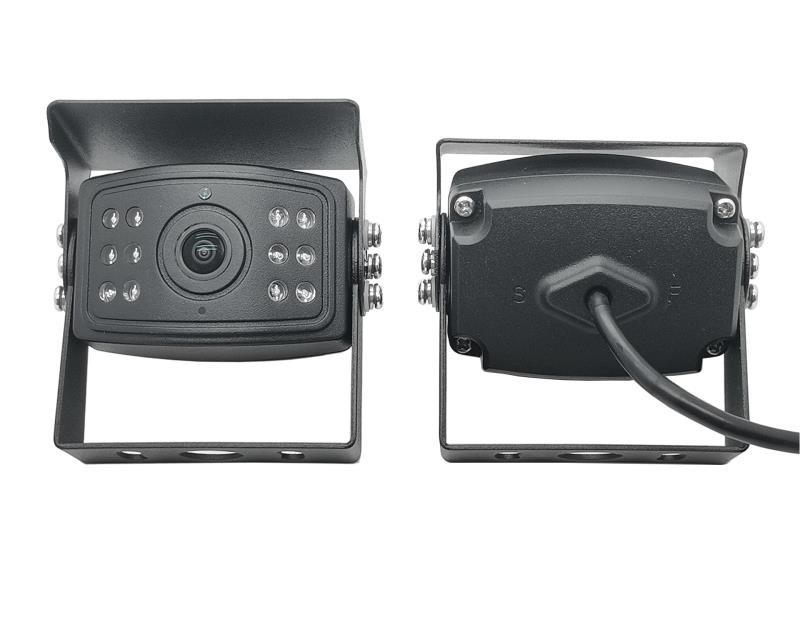
Where Vibration Resistance Matters in Commercial Vehicles
Trucks, Trailers, and Delivery Vehicles
Rear and side cameras can be mounted far from the cab, where body movement, door operation, road vibration, and long cable routes affect the installation. A buyer should evaluate the camera, bracket, connector, and cable support as one assembly. The camera’s shockproof field does not confirm that an unsupported extension cable or loose mating connector will remain stable.
Construction and Agricultural Equipment
Off-road equipment may expose a camera to repeated movement, dust, mud, and washing. These projects often need both mechanical durability and ingress protection, but the two requirements are separate. An IP69K field addresses the listed enclosure protection level; it does not replace a vibration requirement. Buyers comparing exterior camera options can review Xinvisual’s vehicle camera category and then confirm the exact model specification.
Forklifts and Material-Handling Equipment
A forklift camera can be mounted on the mast, carriage, overhead guard, or rear body. The mast and carriage move differently from the chassis, so the mounting position should appear in the sample test record. Cable routing near moving sections also deserves its own inspection. A stable image during a stationary bench test does not approve the installation for normal lifting and driving cycles.
Buses and Special-Purpose Vehicles
Buses, sanitation vehicles, emergency vehicles, and municipal equipment may use several cameras in different positions. An interior camera and an exterior side camera may not need the same enclosure or vibration specification. The RFQ should identify the application for each camera channel instead of assigning one requirement to the complete system without checking each location.
What an 8G or 10G Camera Specification Does and Does Not Tell You
A G value describes an acceleration level. It is not a complete test description. Two cameras with the same listed value may have been evaluated under different conditions unless the supplier confirms a common method and provides the related record.
Reviewed Xinvisual specifications provide the following application-level examples. Specific model references are intentionally omitted from this public guide and can be confirmed during project matching.
| Camera Application | Selected Available Specifications | Listed Durability Field |
|---|---|---|
| Front and rear exterior monitoring | DC12V; PAL/NTSC; 720P or 1080P; 140-degree horizontal angle; IP69K | Shockproof: 10G |
| Left and right exterior monitoring | DC12V; PAL/NTSC; 1080P; 140-degree horizontal angle; IP69K | Shockproof: 10G |
| Driver-cabin monitoring | DC12V; PAL/NTSC; 1080P; 95-degree horizontal angle; non-waterproof | Shockproof: 8G |
This table does not establish that 10G is automatically better for every project or that the 8G and 10G entries were generated with the same method. The reviewed workbook does not state the standard, waveform, frequency range, sweep rate, axis, exposure time, sample quantity, powered or unpowered condition, mounting fixture, or acceptance criteria. Those details remain unconfirmed and must be requested when the project requires auditable vibration performance.
The comparison also shows why durability cannot be separated from application. The exterior-oriented examples include IP69K protection, while the driver-cabin example is listed as non-waterproof. Select the camera around the mounting location, image requirement, and system interface before using the shockproof field as a final filter.
Technical Solution: Build a Complete Vibration Approval Record
1. Define the Mounting Location
Record the vehicle type, camera position, mounting surface, bracket orientation, and whether the position moves during operation. A camera on a fixed rear panel should not share an approval record with a camera on a tail lift or forklift mast unless both positions were tested.
2. Confirm the Exact Camera Configuration
The record should include model number, resolution, PAL/NTSC requirement, viewing angle, voltage, connector, cable length, and image orientation. Do not approve a housing family and then assume every internal camera configuration has the same durability evidence.
3. Request the Missing Test Conditions
If vibration performance is a tender, OEM, or warranty requirement, ask for the test standard or internal method, acceleration level, frequency range, axes, duration, fixture, operating state, sample quantity, and pass criteria. If the supplier cannot provide these items, mark the rating as a catalog field rather than a project-validated test result.
4. Review Bracket, Fasteners, and Cable Strain
Image stability depends on more than the camera body. Confirm that the bracket can be locked at the required angle, fasteners are suitable for the mounting surface, and the cable has strain relief. Leave enough service allowance without creating an unsupported loop that can repeatedly pull on the connector.
Connector design should be checked separately. Xinvisual’s vehicle camera connector guide explains why mating format, pin assignment, and cable assembly matter in a fleet installation. A camera’s shockproof entry does not prove compatibility with an existing harness.
5. Run a Vehicle-Level Sample Test
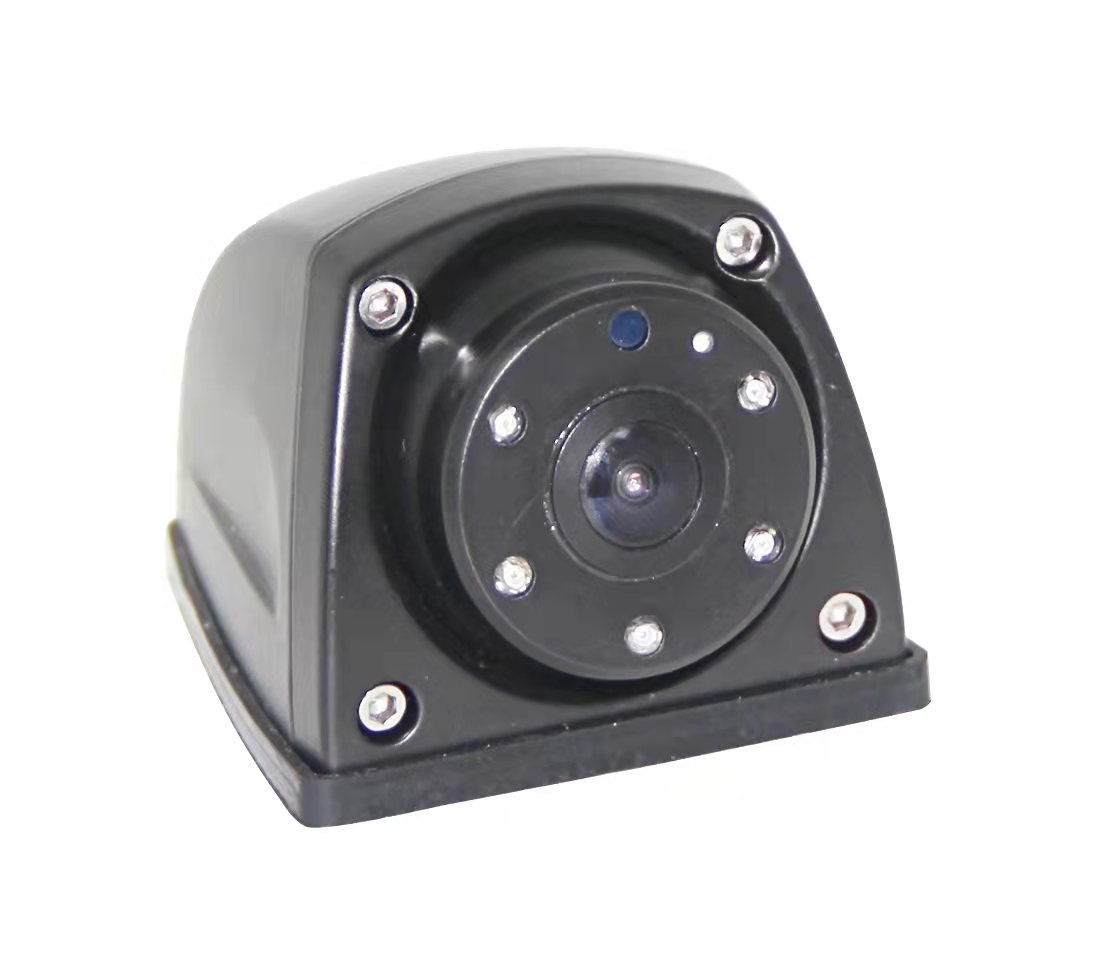
Install the intended camera, bracket, cable, connector, monitor, or DVR on the real vehicle or a representative unit. Record the route and mounting photos before testing. During normal operation, check for intermittent video, connector movement, bracket-angle change, image shake, cable rubbing, and housing contact. Repeat the inspection after the planned driving, lifting, door, or equipment cycles.
This field test is a project approval step, not a substitute for a laboratory vibration report. It helps identify installation problems that a component specification cannot cover.
Product and System Selection Guidance
Start with the application and system interface, then evaluate durability:
- Choose the view: front, rear, side, interior, fork, or work area.
- Confirm the required resolution and the monitor or DVR’s supported signal format.
- Confirm camera power and connector pinout by exact model.
- Separate exterior ingress protection from vibration requirements. For exterior installations, use the IP69K vehicle camera guide as a separate waterproofing reference.
- Compare shockproof or vibration fields only after confirming the test method behind each value.
- Approve the complete installed assembly, including bracket, fasteners, connector, and cable support.
For a side-monitoring project, the HD waterproof IP69K side-view camera is a relevant product-page reference because its current page includes a 10G vibration field. The final RFQ still needs the exact model, video format, viewing angle, connector, and project evidence.
Common Buyer Mistakes
Treating 10G as a Complete Test Report
The number is not enough to reproduce or audit a test. Ask what was tested, how it was mounted, and what counted as a pass.
Assuming IP69K Includes Vibration Resistance
Waterproofing and mechanical durability answer different questions. Confirm both when both matter.
Comparing 8G and 10G Without a Common Method
Do not rank two models solely by the larger number when the test conditions are missing or different.
Ignoring the Installed Assembly
A suitable camera can still produce an unstable system if the bracket moves, the connector is not secured, or the cable repeatedly pulls against the housing.
Approving a Bench Image Only
A clear image on a desk confirms basic operation. It does not reproduce vehicle movement, a forklift lift cycle, trailer-door movement, or cable strain.
Buyer Checklist
- ☐ Vehicle type and exact camera mounting position recorded
- ☐ Camera model and intended view confirmed
- ☐ Resolution, PAL/NTSC, voltage, and connector matched to the monitor or DVR
- ☐ Listed shockproof or vibration value confirmed by exact model
- ☐ Test standard or internal method requested
- ☐ Frequency range, axes, duration, fixture, and operating state requested
- ☐ Sample quantity and acceptance criteria requested
- ☐ IP rating checked separately for exposed positions
- ☐ Bracket, fasteners, cable support, and strain relief included in review
- ☐ Real-vehicle sample route and mounting photos saved
- ☐ Intermittent video and bracket movement checked during operation
- ☐ Approved bill of materials and change-control record completed
FAQ
Is a 10G vehicle camera automatically suitable for every heavy-duty vehicle?
No. The listed value should be checked with its test conditions and the intended mounting position. Vehicle type, bracket, connector, cable support, waterproofing, signal format, and sample results also affect approval.
Does IP69K prove that a camera is vibration resistant?
No. IP69K and vibration resistance are separate specification fields. Confirm the exact camera’s ingress rating and mechanical durability evidence independently.
Can buyers directly compare an 8G camera with a 10G camera?
Only when the relevant test method and conditions are comparable. Without the standard, axes, duration, frequency profile, fixture, and pass criteria, the two values are catalog references rather than a controlled comparison.
What should be included in a vehicle camera sample approval report?
Include the camera model, vehicle and mounting position, bracket, fasteners, cable route, connector, monitor or DVR, power source, video format, test route or operating cycle, observations, photos, and final approved configuration. Attach supplier test evidence when the project requires it.
CTA
Send Xinvisual the vehicle type, camera position, required view, monitor or DVR interface, connector, cable route, waterproofing requirement, and vibration-test documentation requirement. The team can identify available model specifications and the evidence that still needs confirmation before sample approval or a bulk order.