

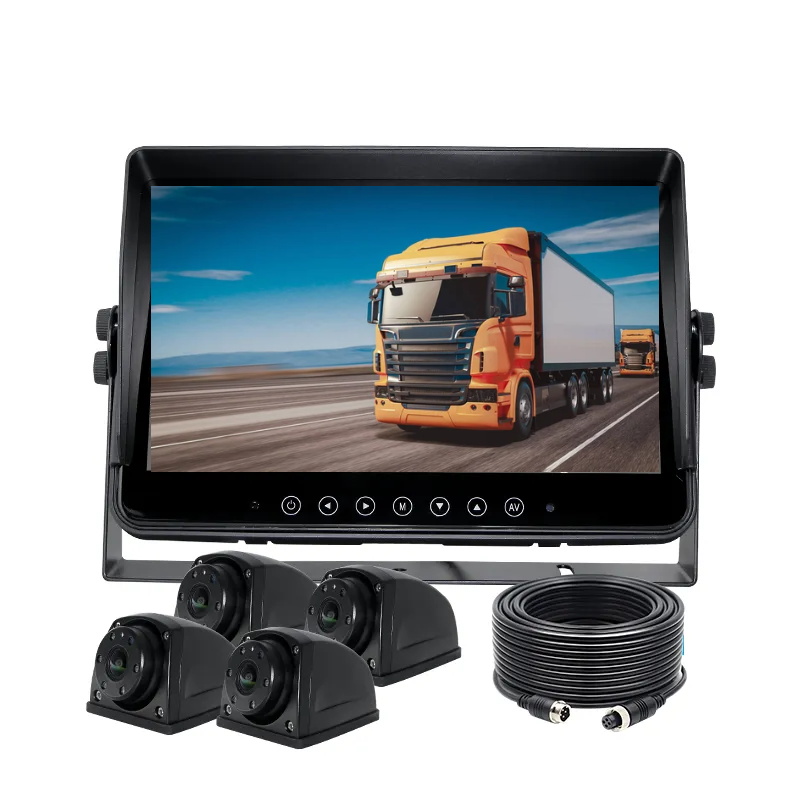
Quick Answer: What Is an AI BSD Blind Spot Detection Camera?
An AI BSD blind spot detection camera is a vehicle safety camera designed to help monitor areas that are difficult for drivers to see directly. Instead of only showing a video image, the system can use AI detection to identify pedestrians, cyclists, vehicles or other objects within the camera view and provide visual or audible alerts through a connected monitor or display system.
For commercial vehicles, this type of camera is commonly used as part of a broader safety monitoring solution. It can support truck side monitoring, bus blind spot awareness, forklift pedestrian detection, industrial vehicle operation and fleet retrofit projects. The goal is not to replace the driver, but to give the operator clearer information around the vehicle.
Keyword Positioning for This Guide
This guide focuses on practical buyer-intent keywords such as AI BSD blind spot detection camera, AI BSD camera and monitor system, truck blind spot camera, forklift pedestrian detection camera and fleet retrofit camera monitoring system. These terms better match Xinvisual’s product chain than very broad head terms such as ADAS or fleet safety platform.
Why Blind Spot Monitoring Matters for Commercial Vehicles
Large vehicles often operate in environments where visibility is limited. Trucks and buses have long body structures, forklifts work in narrow aisles, and construction vehicles may operate around pedestrians, equipment and loading zones. Mirrors and standard cameras help, but operators may still miss movement in blind areas, especially during turning, reversing or low-speed maneuvering.
An AI BSD camera can help improve driver awareness by highlighting potential targets on the monitor and triggering warning alerts. This is especially useful for fleets that need a practical upgrade without redesigning the entire vehicle platform.
For broader background on system evolution, see Xinvisual’s vehicle camera technology guide. To compare AI detection cameras with standard video cameras, read AI BSD camera vs traditional vehicle camera.
Typical AI BSD Detection Applications
Truck Blind Spot Monitoring
For trucks and trailers, AI BSD cameras are often installed on the side of the vehicle to help monitor areas where pedestrians, cyclists or other vehicles may appear during turning or lane movement. This setup is useful for city delivery vehicles, logistics fleets and heavy commercial vehicles.
Bus and Coach Safety Monitoring
Buses and coaches operate around passengers, stations and urban traffic. Side or rear AI detection cameras can help drivers become more aware of people and vehicles near the bus body, especially during stopping, turning and low-speed operation.
Forklift and Warehouse Safety
Forklifts often work close to pedestrians, pallets and warehouse racks. AI pedestrian detection cameras can support rear blind spot monitoring, front approach monitoring or multi-camera awareness for higher-risk warehouse operations. For related applications, see the Forklift Safety Camera Solution.
Fleet Retrofit Projects
Many commercial fleets do not need a fully redesigned vehicle system. They need a practical retrofit solution that combines cameras, monitors, cables, warning functions and sometimes MDVR recording. AI BSD cameras can become one component in this type of fleet safety upgrade. For integration background, see camera-based fleet safety integration.
What an AI BSD Camera System Can Include
A complete camera-based blind spot solution may include several components depending on the vehicle and installation environment:
| Component | Role in the System |
|---|---|
| AI BSD camera | Captures video and supports object or pedestrian detection in selected blind spot areas. |
| Vehicle monitor | Displays the camera view and warning information for the driver or operator. |
| Warning alarm | Provides audible or visual alerts when the system detects a target in the monitored area. |
| MDVR system | Records multi-channel video for fleet review, incident analysis or operation management. |
| Cables and brackets | Support stable installation, vehicle power connection and camera positioning. |
Xinvisual supplies vehicle cameras, monitors, AI BSD cameras and MDVR-related products for commercial vehicle projects. For product details, see the BSD AI Camera and AI Blind Spot Detection Camera Solution.
Recommended Configurations by Vehicle Type
Trucks and Trailers
Recommended setup: side-mounted AI BSD camera, driver monitor, warning alarm and optional MDVR recording. This is suitable for fleets that need side blind spot monitoring or turning awareness support.
Buses and Passenger Vehicles
Recommended setup: side or rear AI detection camera, in-cab monitor and optional multi-camera display. For passenger transport projects, vehicle display products can also be considered separately from driver safety monitoring.
Forklifts and Industrial Vehicles
Recommended setup: rear or front AI pedestrian detection camera, compact monitor and warning alarm. Wireless camera systems may also be useful where cable routing is difficult.
Fleet Recording Projects
Recommended setup: AI BSD cameras combined with MDVR, multiple vehicle cameras and fleet recording channels. This helps operators review camera footage and build a more complete vehicle monitoring system.
How to Choose an AI BSD Blind Spot Detection Camera
Before selecting an AI BSD camera, buyers should confirm the vehicle type, installation position, target detection area and display requirements. A truck side camera project is different from a forklift pedestrian detection project, and a fleet retrofit may need different cable lengths, connectors and monitor sizes.
- Confirm the vehicle type: truck, bus, forklift, trailer or industrial vehicle.
- Define the monitored area: side blind spot, rear blind spot, front approach or multi-camera coverage.
- Check camera housing and waterproof requirements for outdoor or industrial use.
- Confirm monitor size, input type and warning display requirements.
- Decide whether MDVR recording is required for fleet management.
- Share vehicle photos or installation drawings when requesting a recommendation.
Compliance-Safe Application Notes
AI BSD cameras can be used as a safety system component for blind spot detection applications. For projects related to European vehicle safety requirements, buyers should confirm the full system design, installation position, testing process and certification requirements with the responsible vehicle engineer or local authority.
For official context, buyers can review the Transport for London Direct Vision Standard, UNECE Regulation No.151 for Blind Spot Information Systems and UNECE Regulation No.159 for Moving Off Information Systems. Xinvisual also provides a practical DVS, BSIS and MOIS guide for related camera-based safety applications.
Xinvisual can support BSIS/MOIS-style blind spot detection applications and camera-based safety monitoring projects, but product selection should be based on the complete vehicle requirement rather than a single camera specification.
Related Xinvisual Products and Solutions
- BSD AI Camera
- 10.1-Inch BSD AI Vehicle Monitor
- Vehicle Monitors
- MDVR Systems
- Forklift Safety Camera Solution
- Fleet Camera Monitoring Solution
Related Technical Articles
- AI BSD camera vs traditional vehicle camera
- DVS, BSIS and MOIS guide
- Camera-based fleet safety integration
- Vehicle camera technology guide
FAQ
Is an AI BSD camera the same as a standard vehicle camera?
No. A standard camera mainly provides video visibility, while an AI BSD camera can support target detection and warning output when connected to a suitable monitor or system.
Can AI BSD cameras be used on forklifts?
Yes. AI BSD cameras can be used for forklift pedestrian detection or blind spot monitoring, depending on installation position and monitor configuration.
Can the system connect with an MDVR?
In many fleet projects, cameras can be combined with MDVR systems for video recording and multi-channel monitoring. The final configuration depends on signal format, channel count and vehicle wiring requirements.
Does an AI BSD camera guarantee compliance with regulations?
No single camera should be described as a complete regulatory approval solution by itself. For DVS, BSIS or MOIS-related projects, buyers should confirm the complete system, installation and local requirements.
How can Xinvisual recommend a suitable system?
You can share the vehicle type, installation position, target detection area, monitor requirement and quantity. Xinvisual can then recommend a suitable camera, monitor and system combination for the project.
Request an AI BSD Camera Recommendation
If you are planning a truck, bus, forklift or fleet safety monitoring project, contact Xinvisual with your vehicle photos and installation requirements. Our team can help recommend a practical AI BSD camera and monitor combination for your application.
Contact Xinvisual for an AI BSD camera recommendation.