

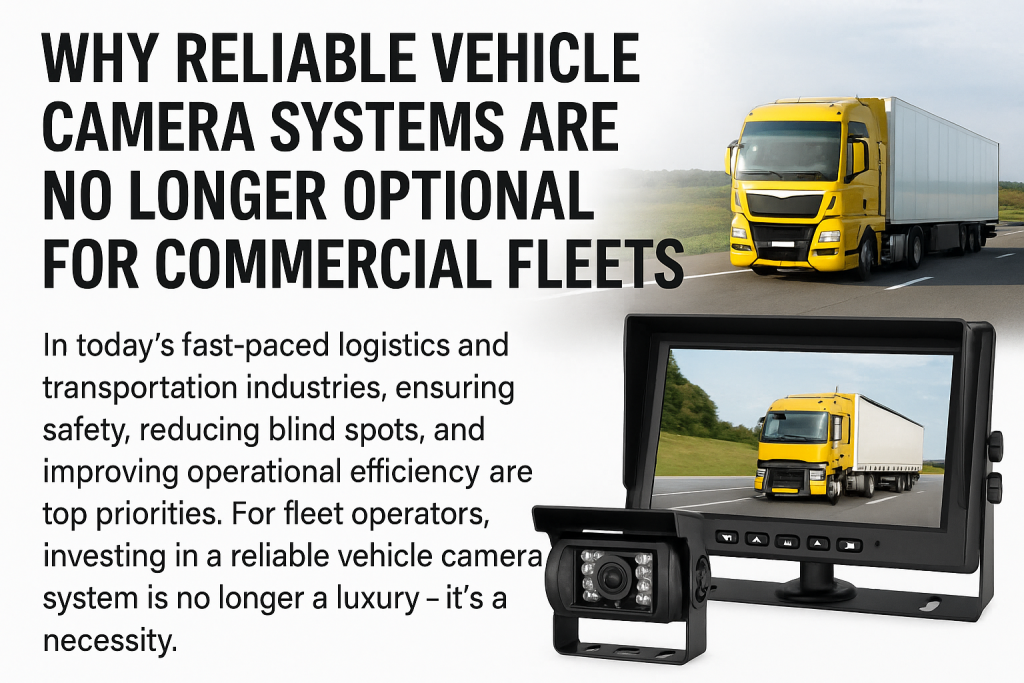
Commercial fleets operate in environments where drivers need more visibility around trucks, buses, trailers, forklifts and industrial vehicles. Mirrors are still important, but many fleet operators now add vehicle camera monitoring systems to support reversing, blind spot awareness, loading area visibility and recorded fleet operation.
This guide explains why fleets upgrade to camera monitoring systems, what components are commonly used and how to choose a practical setup for different commercial vehicle applications.
Quick Answer
Commercial fleets upgrade to vehicle camera monitoring systems to improve driver visibility, support reversing and blind spot monitoring, record driving events and create a more complete safety view around commercial vehicles. A typical system can include vehicle cameras, monitors, MDVR recording units, wireless camera systems or AI blind spot detection cameras depending on the vehicle type and risk area.
Why Basic Mirrors Are Not Enough for Modern Fleets
Large commercial vehicles often have areas that are difficult for drivers to see directly. These areas can appear behind the vehicle, along the side, around loading docks or near pedestrians in warehouses and industrial yards.
Vehicle camera monitoring systems provide an additional visual reference. They do not replace safe driving procedures, but they help operators see more clearly during low-speed movement, reversing, parking and vehicle positioning.
Main Benefits of Vehicle Camera Monitoring Systems
Better Visibility Around the Vehicle
Rear, side, front and dome cameras can help drivers monitor blind areas that are difficult to check with mirrors alone. This is especially useful for trucks, buses, forklifts, trailers and construction vehicles.
Support for Reversing and Low-Speed Maneuvering
Backup cameras and vehicle monitors give drivers a clearer view when reversing into loading bays, parking in depots or moving through narrow work areas.
Recording Support with MDVR Systems
When cameras are connected to an MDVR system, fleets can record video from multiple channels. This can support operation review, driver training and incident investigation.
Flexible Retrofit for Existing Vehicles
Many camera and monitor systems can be installed on existing vehicles. This makes them suitable for fleet retrofit projects where replacing the vehicle is not practical.
Recommended System Components
| Component | Role in the system |
| Vehicle cameras | Provide rear, side, front or interior video views. |
| Vehicle monitors | Display live camera views for drivers and operators. |
| MDVR systems | Record multi-channel video for fleet operation review. |
| Wireless camera systems | Support retrofit applications where cable routing is difficult. |
| AI BSD cameras | Support blind spot detection applications for trucks, buses and industrial vehicles. |
Common Fleet Applications
Trucks and Trailers
Truck fleets often use rear cameras, side cameras, monitors and MDVR systems to support reversing, lane-side visibility and recorded operation.
Buses and Passenger Transport
Bus and coach applications may use rear view cameras, interior cameras, roof-mounted displays or electronic mirror monitor products depending on the vehicle configuration.
Forklifts and Warehouse Vehicles
Warehouse vehicles often need compact camera systems for rear view, fork view, pallet handling and pedestrian awareness. Learn more about the Forklift Safety Camera Solution.
Construction and Agricultural Vehicles
Outdoor vehicles may need waterproof cameras, durable monitors and stable connectors for dust, vibration and changing weather conditions.
What To Consider Before Upgrading
- Vehicle type and installation position
- Required camera view: rear, side, front, fork view or interior
- Wired or wireless installation requirements
- Monitor size and mounting position
- Whether video recording is required
- Connector type and cable length
- Waterproof and vibration resistance requirements
- OEM or project customization needs
Related Xinvisual Products and Solutions
- Vehicle Cameras
- Vehicle Monitors
- AHD 1080P MDVR System with 4G, WiFi and GPS
- Fleet Camera Monitoring Solution
- AI Blind Spot Detection Solution
- Contact Xinvisual for a system recommendation
FAQ
What is a vehicle camera monitoring system for fleets?
It is a system that combines vehicle cameras, monitors and optional recording equipment to provide visual support around commercial vehicles.
Can a fleet camera system be installed on existing vehicles?
Yes. Many systems can be installed as retrofit solutions, depending on the vehicle, mounting position and cable routing requirements.
When should a fleet use an MDVR system?
An MDVR system is useful when the fleet needs multi-channel video recording, remote management options or driving event review.
Are wireless camera systems suitable for fleets?
Wireless camera systems can be suitable for trailers, forklifts and retrofit applications where cable installation is difficult. The final choice depends on distance, interference conditions and vehicle structure.
Can Xinvisual recommend a complete system?
Yes. Xinvisual can recommend suitable cameras, monitors, MDVR systems, cables and connectors based on vehicle type and application requirements.