

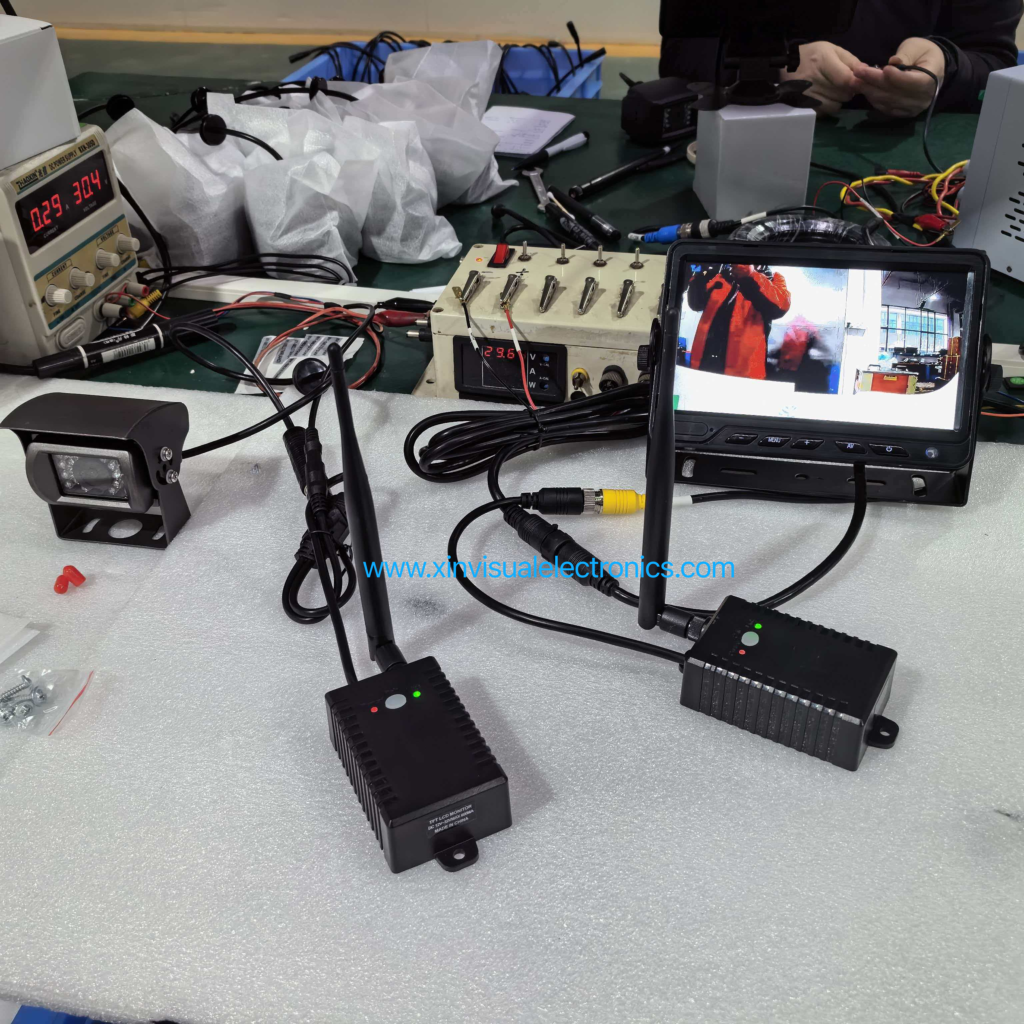
Understanding Wide Voltage in Vehicle Monitors and Cameras: Why DC 12V–36V Matters
When choosing a vehicle monitor or camera system, buyers often compare visible features first, such as screen size, resolution, waterproof rating, viewing angle, or night vision performance. These specifications are important, but they do not tell the full story of how reliably the system will perform once installed on a working vehicle.
One technical factor that has a direct impact on compatibility and long-term stability is the input voltage range.
For commercial vehicles and heavy-duty equipment, wide voltage support is not just a bonus feature. In many applications, it is a practical requirement.
What Is Wide Voltage Support?
Wide voltage support means the device can operate normally across a broader range of input power conditions.
In vehicle electronics, a common specification is:
DC 12V–36V
This range is widely used because it can cover both 12V and 24V vehicle systems while also allowing for voltage fluctuation during real operation.
Instead of depending on one fixed power level, a wide voltage device is designed to tolerate variations that naturally occur in working vehicles.
Why Vehicle Voltage Is Not Always Stable
Unlike controlled indoor equipment, vehicle electronics work in dynamic electrical environments. The supplied voltage is affected by the condition of the battery, alternator output, engine startup behavior, and the number of onboard electrical loads.
Typical causes of voltage variation include:
Engine startup and shutdown
During engine ignition, the electrical system may experience a temporary voltage drop or surge. Some devices may reboot, flicker, or fail to initialize properly if their voltage tolerance is too narrow.
Charging system fluctuation
The alternator does not always output a perfectly constant voltage. The actual supply can vary depending on engine speed, battery condition, and operating load.
Different vehicle platforms
Passenger vehicles commonly use 12V systems, while trucks, buses, forklifts, and many industrial vehicles use 24V systems. Equipment intended for multiple vehicle categories must be able to adapt accordingly.
Additional electronic devices
Modern commercial vehicles may include DVRs, GPS trackers, sensors, alarms, wireless modules, and multiple cameras. The more devices connected, the more important stable power compatibility becomes.
Why DC 12V–36V Is Common in Professional Vehicle Electronics
A wide input range such as DC 12V–36V is practical because it increases compatibility across a broad range of commercial and industrial vehicles.
This makes the product more suitable for applications such as:
- trucks
- buses
- forklifts
- agricultural machinery
- construction equipment
- sanitation vehicles
- RVs
- service and utility vehicles
For distributors and installers, this reduces the need to manage different power versions for different vehicle types.
For project buyers, it helps lower the risk of mismatch during installation.
What Problems Can Happen Without Wide Voltage Support?
If a monitor or camera does not have adequate voltage tolerance, the system may appear normal in basic testing but show instability in actual field use.
Common symptoms include:
- monitor flickering during engine startup
- random reboot or shutdown
- black screen under certain operating conditions
- unstable image signal
- reverse trigger not switching correctly
- camera working on one vehicle but not another
- higher failure rate over time
- more service and troubleshooting work after installation
These issues are especially serious in safety-related applications, such as reversing, blind spot monitoring, fleet surveillance, or driver observation.
Wide Voltage Is About More Than “Can It Turn On?”
Some buyers only check whether the device powers up successfully. In reality, that is only the minimum requirement.
The more important question is:
Can the system remain stable during real vehicle use?
A suitable wide voltage design helps the equipment continue working reliably when the vehicle starts, stops, vibrates, runs for long hours, or operates in changing weather conditions.
In professional applications, stable operation matters more than laboratory-style pass/fail testing.
Wide Voltage and Installation Efficiency
Wide voltage support also improves installation flexibility.
For installers and system integrators, a product with broad power compatibility means:
- fewer compatibility surprises on site
- less need for voltage-related troubleshooting
- easier deployment across mixed fleets
- fewer returns caused by power mismatch
- lower after-sales service pressure
This is one reason why experienced buyers often pay close attention to voltage range even when end users do not ask about it directly.
How Buyers Should Evaluate Voltage Specifications
When comparing vehicle monitors or cameras, buyers should not look only at the printed voltage range. They should also consider how the product will be used.
A practical evaluation should include the following points:
1. Confirm the input voltage range
Check whether the product supports practical ranges such as DC 12V–36V or DC 10V–32V.
2. Match the target vehicle type
Identify whether the product will be installed on a 12V system, 24V system, or across mixed vehicle categories.
3. Review the full system structure
If the installation includes multiple cameras, a DVR, wireless modules, AI functions, or other accessories, power stability becomes even more important.
4. Consider the operating environment
Heavy-duty vehicles usually face more vibration, more temperature variation, and longer daily working hours than ordinary vehicles.
5. Ask about field application experience
A supplier with practical project experience can usually give more useful advice than one that only provides a data sheet.
Wide Voltage Is Important, but Design Quality Still Matters
A broader voltage range is helpful, but it should not be judged in isolation.
Good real-world performance also depends on overall hardware design, including:
- power circuit stability
- component quality
- anti-vibration design
- thermal control
- waterproof sealing
- connector reliability
- cable quality
- installation method
In other words, wide voltage support is one important part of reliability, but it works best when the entire product is designed for vehicle use.
What This Means for B2B Buyers
For distributors, fleet solution providers, installers, and importers, voltage compatibility directly affects:
- product selection efficiency
- installation success rate
- customer satisfaction
- service workload
- repeat order potential
A product that fits more vehicle platforms and performs more consistently in the field is usually more valuable than one that only looks attractive in specifications.
Conclusion
Wide voltage support is often not the first feature buyers notice, but it is one of the technical details that most strongly affects field reliability.
For vehicle monitors and cameras used in trucks, buses, forklifts, agricultural equipment, and other commercial vehicles, a practical input range such as DC 12V–36V helps improve compatibility, reduce installation risk, and support more stable long-term operation.
For B2B buyers, this is not just an electrical specification. It is part of making better purchasing decisions and building more reliable vehicle safety systems.
Frequently Asked Questions
What does DC 12V–36V mean in a vehicle monitor?
It means the monitor can operate across a broad input voltage range, making it suitable for both 12V and 24V vehicle systems and better able to handle voltage fluctuation.
Why is wide voltage important for trucks and forklifts?
Because these vehicles often operate under less stable electrical conditions, and a wider voltage range helps improve compatibility and reduce system instability.
Can a narrow voltage monitor still work in commercial vehicles?
It may work in some cases, but it is generally more likely to face instability, compatibility issues, or higher after-sales problems in demanding applications.
Is wide voltage support enough to guarantee reliability?
No. Voltage range is important, but reliability also depends on hardware design, waterproofing, cable quality, connectors, and installation conditions.
Looking for a reliable wide voltage vehicle monitor or camera system for trucks, buses, forklifts, or heavy-duty equipment?
Xinvisual Electronics focuses on practical vehicle safety solutions for demanding working environments. Feel free to contact us to discuss your vehicle type, voltage requirements, and project needs.